CCTV Camera Installation Guide: Everything You Need to Know
Introduction
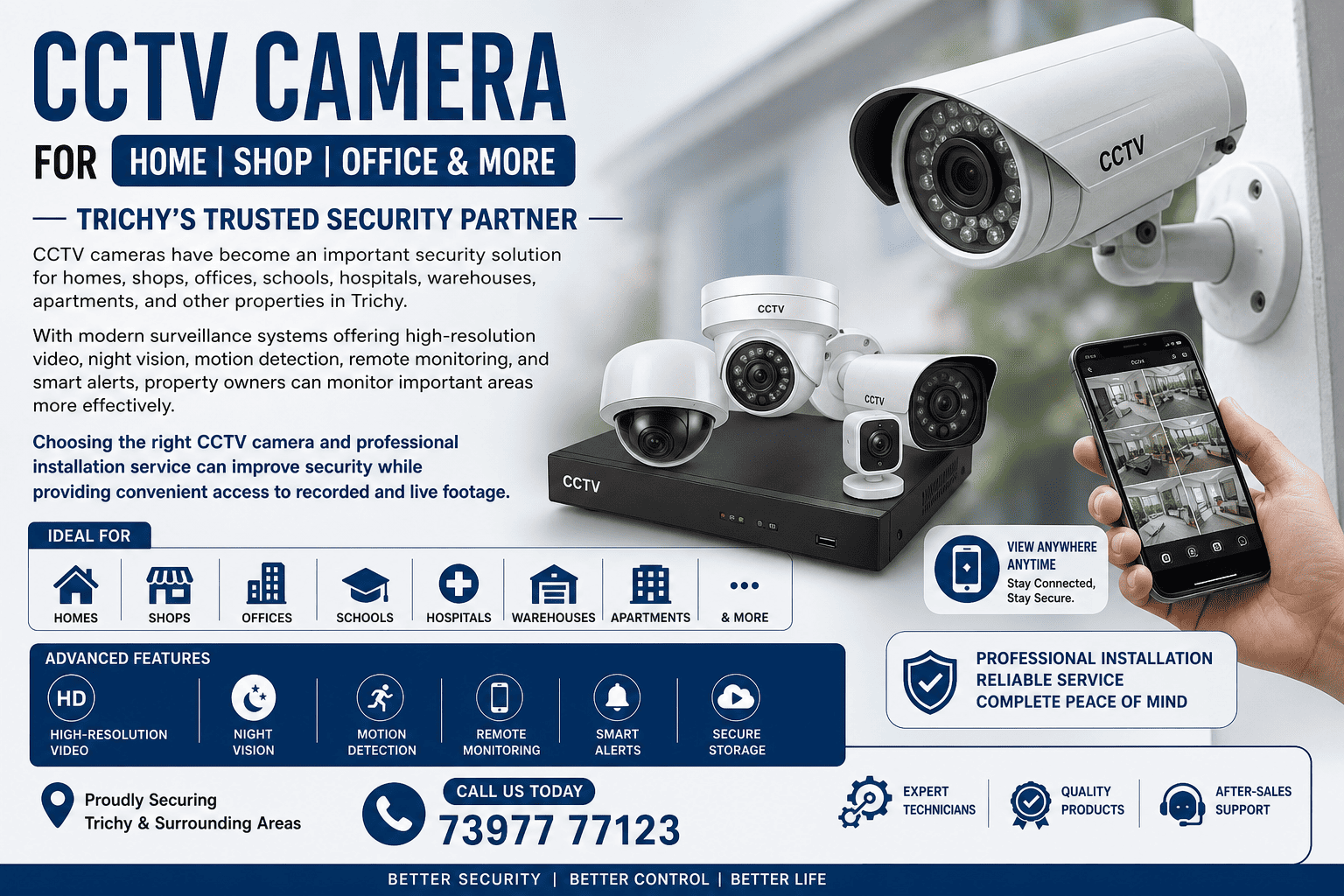
Security is a growing concern for homeowners and business owners alike. CCTV camera systems have become one of the most effective ways to monitor properties, prevent theft, and ensure the safety of people and valuable assets. However, simply purchasing high-quality cameras is not enough. Proper installation is essential to maximize coverage, eliminate blind spots, and ensure reliable performance. A well-planned CCTV installation provides clear video footage, remote monitoring capabilities, and peace of mind. Whether you are installing a surveillance system for a home, office, retail store, warehouse, or industrial facility, understanding the installation process helps you build a security solution that meets your specific needs.
Choose the Right CCTV Camera System
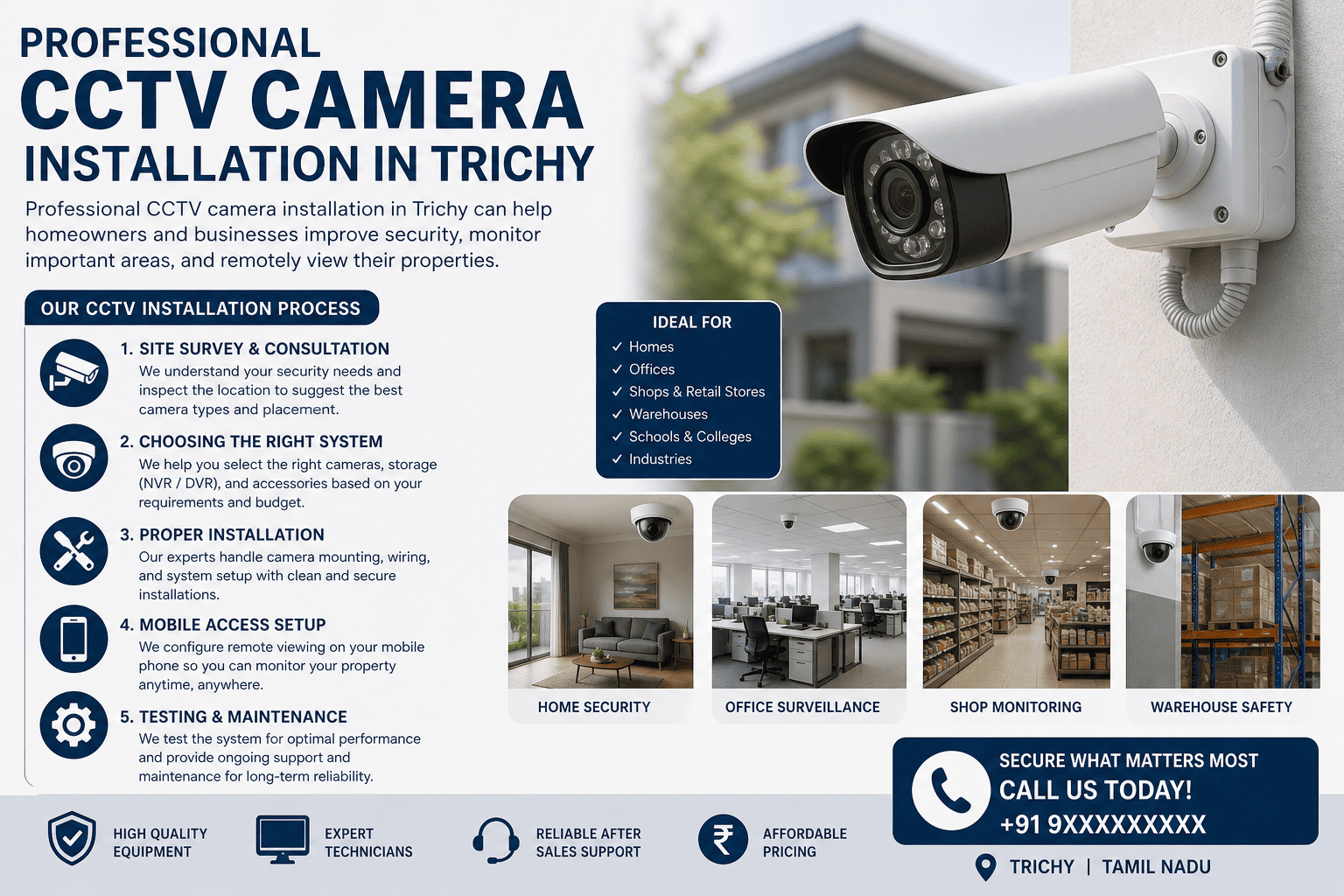
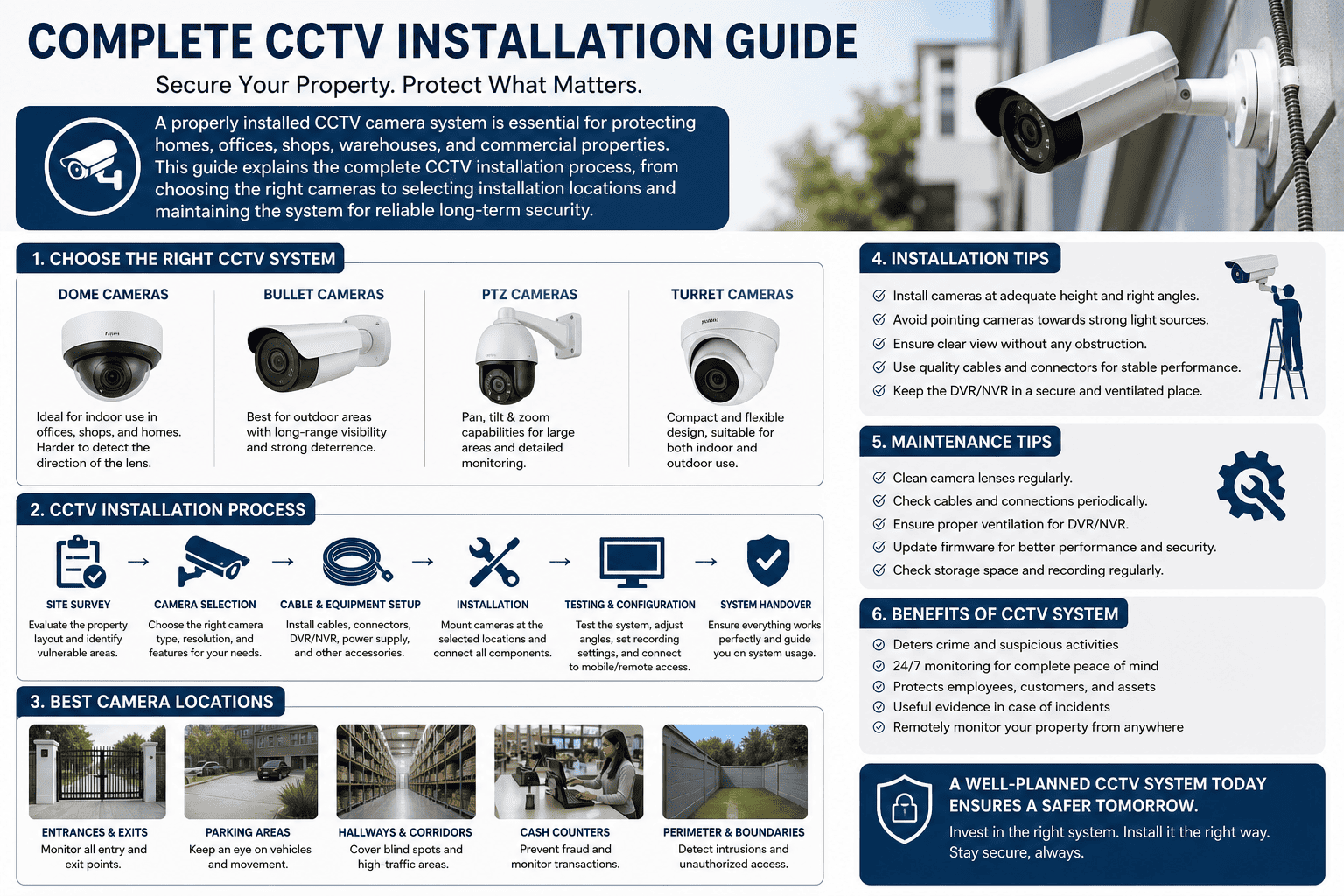
The first step in CCTV installation is selecting the appropriate camera system. Different types of cameras are designed for different environments. Dome cameras are suitable for indoor surveillance, bullet cameras are ideal for monitoring outdoor spaces, PTZ (Pan-Tilt-Zoom) cameras offer flexible viewing angles, and IP cameras provide advanced features such as remote access and high-definition video. Choosing the right camera depends on your property's size, security requirements, lighting conditions, and budget.
Plan Camera Locations Carefully
Before installation begins, identify the most important areas that require surveillance. Cameras should be positioned to monitor main entrances, back doors, parking areas, hallways, reception areas, storage rooms, cash counters, and property boundaries. Proper placement helps eliminate blind spots while ensuring that critical locations are covered. Cameras should also be installed at a suitable height to prevent tampering while capturing clear images of people and activities.
Install the Cameras Securely
After finalizing the camera locations, mount the cameras using strong brackets and secure fasteners. Outdoor cameras should be installed in weather-protected positions and designed to withstand rain, dust, and extreme temperatures. Ensure that cameras are angled correctly to provide maximum visibility without being blocked by trees, walls, lighting fixtures, or other obstacles. Proper alignment is essential for obtaining high-quality recordings.
Connect the Recording System
Once the cameras are installed, connect them to a Digital Video Recorder (DVR) or Network Video Recorder (NVR), depending on the type of CCTV system being used. Wired systems require video and power cables, while IP cameras may use Ethernet cables or wireless connectivity. The recording device stores video footage, allowing users to review recordings whenever necessary. Proper cable management also improves system reliability and gives the installation a neat and professional appearance.
Configure Remote Monitoring
Modern CCTV systems allow users to monitor live video remotely using smartphones, tablets, or computers. After installation, configure the mobile application or web interface according to the manufacturer's instructions. Remote monitoring enables property owners to view live footage, receive motion alerts, playback recordings, and monitor multiple camera locations from anywhere with an internet connection. This feature is especially useful for business owners managing multiple sites or homeowners who travel frequently.
Test the Entire CCTV System
After completing the installation, test every camera to verify image quality, recording functionality, night vision performance, motion detection, and remote access. Walk through monitored areas to confirm that cameras capture clear footage without blind spots. Reviewing test recordings helps identify any adjustments needed before the system becomes fully operational.
Maintain Your CCTV System Regularly
Routine maintenance ensures long-term performance and reliability. Clean camera lenses regularly to remove dust, dirt, and watermarks that may affect image quality. Inspect cables, connectors, mounting brackets, and recording devices periodically to ensure everything is functioning correctly. Updating camera firmware and software also helps improve security, performance, and compatibility with new features.
Benefits of Professional CCTV Installation
While small CCTV systems may be suitable for self-installation, professional installation provides several advantages. Security experts assess your property's layout, recommend the best camera positions, configure recording systems correctly, and ensure complete coverage. Professional installers also minimize blind spots, optimize camera angles, and verify that all components operate efficiently. This results in a more reliable and effective security system that protects your investment.
Common Installation Mistakes to Avoid
Many installation problems can reduce the effectiveness of a CCTV system. Cameras should not be placed too high or too low, as this can affect image clarity. Avoid pointing cameras directly toward bright lights or sunlight, which may cause glare and reduce visibility. Ensure there are no obstacles blocking the camera's field of view, and always use high-quality cables and reliable power sources for consistent operation. Regular inspections help identify and correct issues before they affect system performance.
Conclusion
A properly installed CCTV camera system is one of the best investments for protecting your property, employees, customers, and valuable assets. Careful planning, correct camera placement, secure installation, and regular maintenance ensure reliable surveillance and long-term performance. Whether securing a home, office, retail store, or industrial facility, following the right installation practices helps maximize security while providing confidence and peace of mind. Investing in a professionally installed CCTV system today creates a safer environment for the future.