Wired vs Wireless CCTV Cameras: Which One is Best for Your Property?
Introduction
Security has become a top priority for homeowners, businesses, educational institutions, hospitals, and commercial establishments. CCTV camera systems play a crucial role in protecting people, monitoring activities, preventing theft, and providing evidence during security incidents. However, one of the first decisions buyers need to make is whether to install wired or wireless CCTV cameras. Both systems are designed to improve surveillance, but each has unique advantages depending on the property's size, installation requirements, internet connectivity, and security expectations. Understanding the strengths and limitations of wired and wireless CCTV systems will help you make an informed investment that provides reliable protection for years to come.
What Are Wired CCTV Cameras?
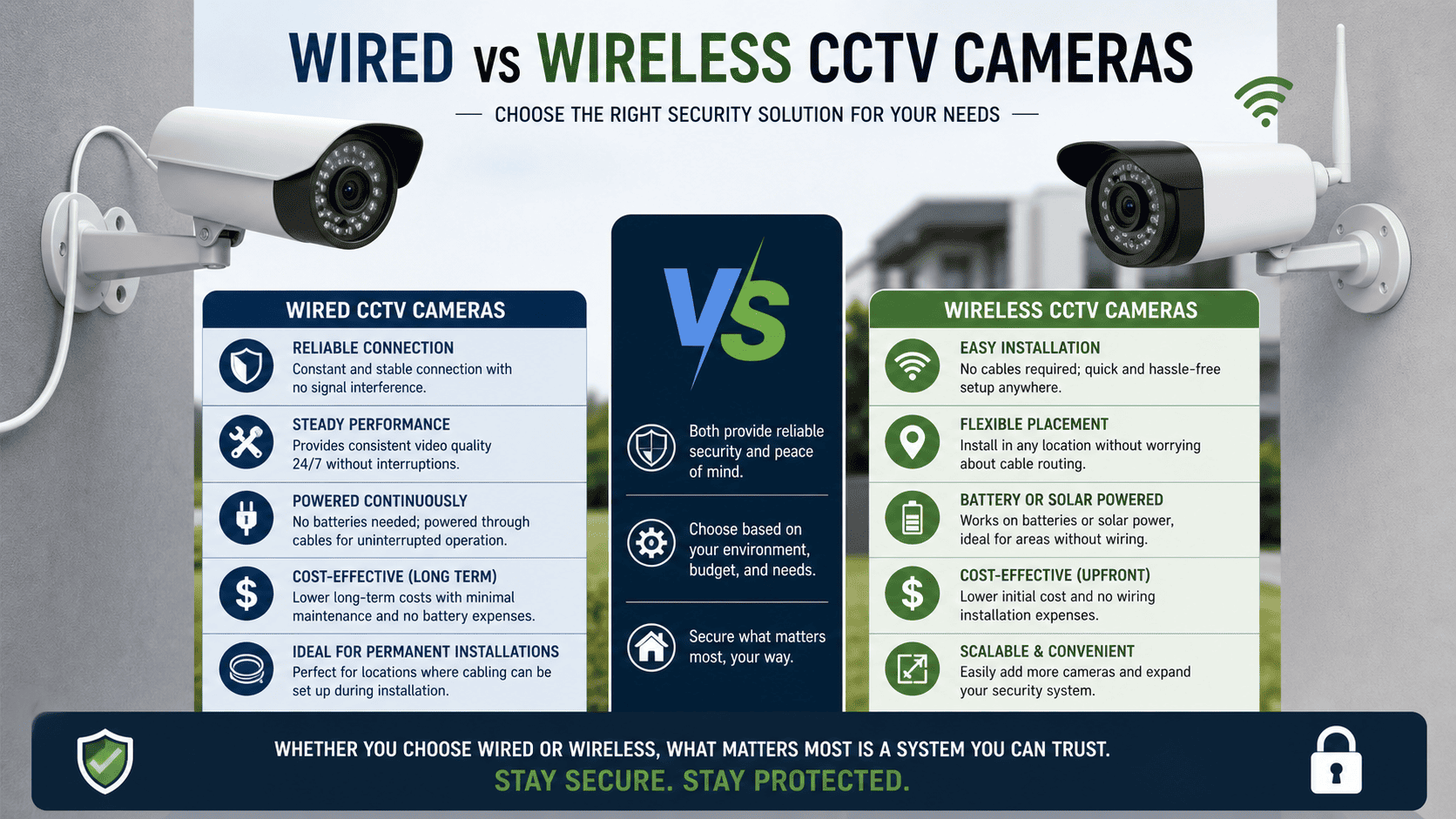
Wired CCTV cameras are connected to a Digital Video Recorder (DVR) or Network Video Recorder (NVR) using physical cables. These cables transmit both video signals and, in many cases, power to the cameras. Because the connection is direct, wired CCTV systems provide stable performance with minimal signal interference. They are commonly installed in offices, factories, shopping malls, warehouses, schools, hospitals, and large residential properties where continuous surveillance is required.
What Are Wireless CCTV Cameras?
Wireless CCTV cameras use Wi-Fi or other wireless technologies to transmit video footage to a recording device or cloud storage. While many wireless cameras still require a power source, they eliminate the need for long video cables, making installation quicker and more flexible. Wireless CCTV systems are popular for homes, apartments, small businesses, and temporary installations where running cables may be difficult or expensive. Many modern wireless cameras also include mobile applications that allow users to monitor live footage remotely.
Installation and Setup
One of the biggest differences between wired and wireless CCTV systems is the installation process. Wired cameras require structured cabling throughout the property, which may involve drilling walls, routing cables through ceilings, and installing recording equipment in a secure location. Although installation takes more time, the result is a stable and professional surveillance system.
Wireless CCTV cameras are easier and faster to install because they require fewer cables. This makes them an excellent option for rented properties, existing buildings, and locations where major construction work is not practical. Their flexibility also allows cameras to be relocated easily whenever security requirements change.
Performance and Reliability
Wired CCTV cameras generally provide more consistent performance because they are not affected by wireless signal interference. Video transmission remains stable even in large buildings, making wired systems suitable for continuous monitoring and high-security environments.
Wireless CCTV cameras depend on the quality and strength of the Wi-Fi network. Weak signals, internet interruptions, or network congestion may affect video quality or cause temporary connection issues. However, with a strong and reliable wireless network, modern wireless cameras deliver excellent performance for most residential and small commercial applications.
Video Quality and Storage
Both wired and wireless CCTV systems now support high-definition and ultra-high-definition video recording. Whether using wired or wireless cameras, users can benefit from clear video footage, night vision, motion detection, and advanced recording features. Wired systems commonly store recordings on DVR or NVR devices installed on-site, while wireless systems often support both local storage and secure cloud-based recording. Cloud storage provides additional protection by keeping important footage safe even if local recording equipment is damaged or stolen.
Maintenance and Scalability
Wired CCTV systems generally require very little maintenance after installation, making them ideal for long-term use. Expanding a wired system may require additional cabling and professional installation when adding new cameras.
Wireless systems offer greater flexibility for future expansion. Additional cameras can often be connected to the existing network with minimal effort, making wireless CCTV an attractive option for homeowners and businesses expecting future growth. Regular software updates and maintaining a stable internet connection help ensure optimal performance.
Which CCTV System Is Best for Your Property?
The best choice depends on your specific security requirements. If you own a large commercial building, factory, warehouse, school, or office where uninterrupted surveillance and maximum reliability are essential, a wired CCTV system is often the better investment. Its stable connection and dependable performance make it suitable for continuous monitoring.
For homes, apartments, retail shops, small offices, and locations where easy installation is important, wireless CCTV cameras provide an excellent balance of convenience, flexibility, and smart features. They are particularly useful for users who want remote access through mobile applications and cloud-based monitoring.
Conclusion
Both wired and wireless CCTV cameras offer excellent security benefits, but the right solution depends on your property's size, budget, installation requirements, and monitoring preferences. Wired CCTV systems provide superior stability and are ideal for large-scale security installations, while wireless CCTV cameras offer quick installation, flexibility, and convenient remote monitoring. By evaluating your security needs and consulting with professional CCTV installers, you can choose a surveillance system that delivers reliable protection, peace of mind, and long-term value.