Wired vs Wireless CCTV Cameras: Which Security Solution Is Right for You?
Introduction
Modern security systems have become an important investment for homeowners, businesses, schools, hospitals, warehouses, and commercial buildings. CCTV cameras not only help prevent theft and unauthorized access but also provide continuous monitoring and valuable evidence when incidents occur. When selecting a surveillance system, one of the most common questions is whether to choose wired or wireless CCTV cameras. Both technologies offer excellent security features, but each is designed to meet different requirements. Factors such as property size, installation complexity, internet connectivity, budget, and future expansion all influence the right choice. Understanding the strengths and limitations of wired and wireless CCTV cameras can help you make a confident decision and ensure long-term protection for your property.
Understanding Wired CCTV Cameras
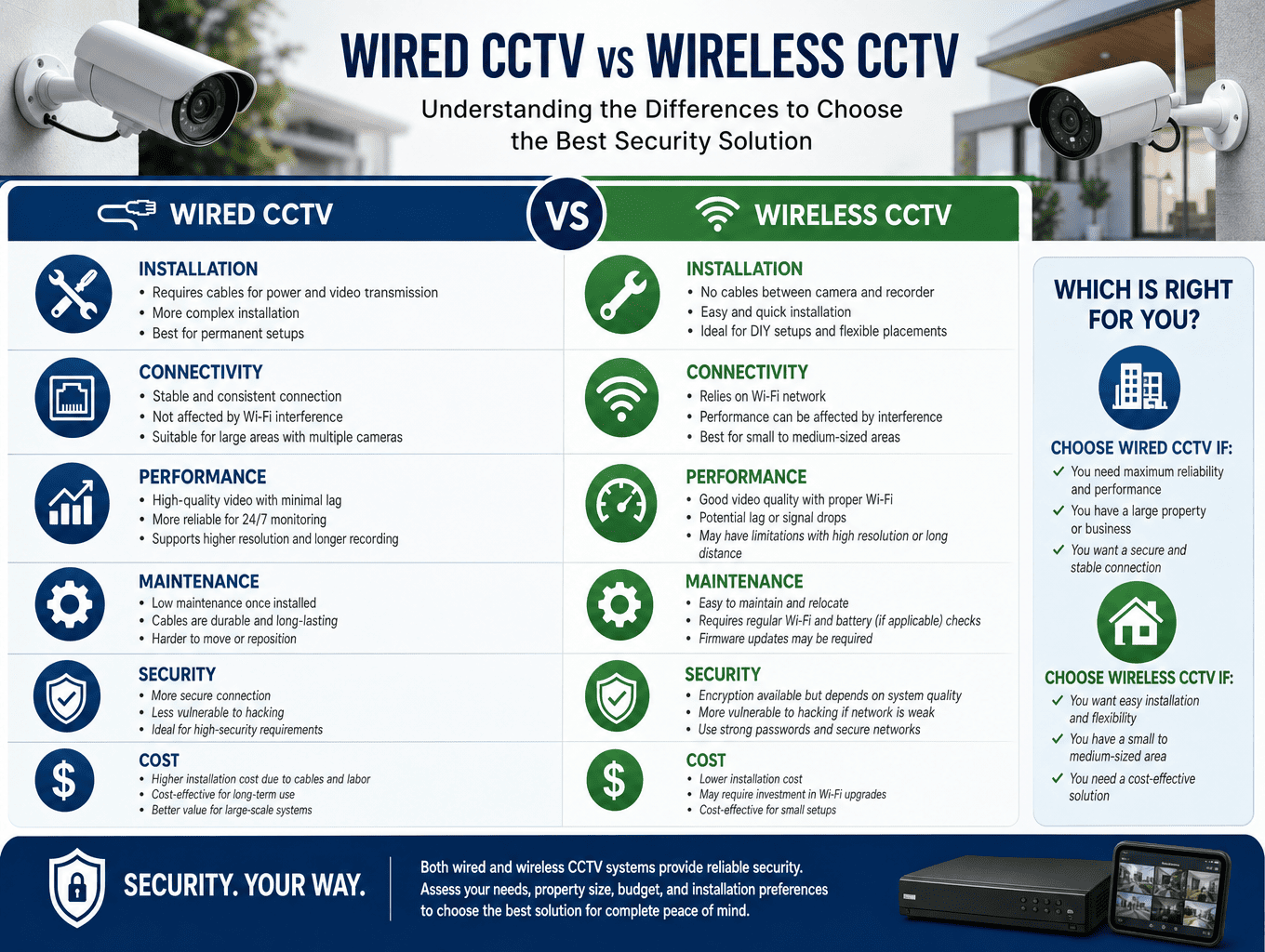
Wired CCTV cameras use physical cables to connect each camera to a Digital Video Recorder (DVR) or Network Video Recorder (NVR). These cables carry video signals and, in some systems, power as well. Because the connection is direct, wired systems deliver stable and uninterrupted video transmission without depending on wireless signals. They are widely used in offices, factories, educational institutions, shopping malls, warehouses, and large residential buildings where reliable 24/7 surveillance is required. Once professionally installed, wired CCTV systems provide dependable performance with minimal connectivity issues.
Understanding Wireless CCTV Cameras
Wireless CCTV cameras transmit video footage through a Wi-Fi network instead of dedicated video cables. Although many wireless cameras still require a power connection, they eliminate the need for extensive wiring throughout the property. This makes installation quicker, cleaner, and more flexible. Wireless CCTV cameras are commonly used in homes, apartments, retail stores, and small offices where users want easy installation and remote monitoring through mobile applications. Many modern wireless systems also support cloud storage, allowing recorded footage to be accessed securely from anywhere with an internet connection.
Installation and Flexibility
Installation is one of the major differences between wired and wireless CCTV systems. Wired cameras require structured cabling, which may involve routing wires through walls, ceilings, or underground conduits. While the installation process takes longer, it results in a permanent and highly reliable surveillance network.
Wireless CCTV cameras are much easier to install because fewer cables are required. This makes them an excellent option for existing buildings, rented properties, and locations where running cables is difficult. If security requirements change, wireless cameras can usually be relocated with minimal effort, offering greater flexibility for homeowners and small businesses.
Performance and Reliability
When it comes to consistent performance, wired CCTV systems generally have the advantage. Since video data travels through physical cables, the connection remains stable without interference from Wi-Fi signals or network congestion. This makes wired cameras ideal for properties that require continuous monitoring and high-quality recordings.
Wireless CCTV cameras rely on the strength and stability of the internet connection. A strong Wi-Fi network allows them to perform exceptionally well, but weak signals or network interruptions may affect live viewing or recording quality. For smaller properties with reliable internet access, wireless systems still provide excellent security performance.
Storage and Remote Monitoring
Wired CCTV systems typically store recordings on local DVR or NVR devices, giving users complete control over their surveillance data. Wireless CCTV cameras often offer both local storage and cloud-based recording options. Cloud storage provides an additional layer of protection because important footage remains secure even if local recording equipment is damaged or stolen. Wireless systems also allow users to monitor live video, review recordings, and receive motion alerts directly on their smartphones from virtually anywhere.
Maintenance and Future Expansion
Once installed, wired CCTV systems require very little maintenance beyond routine inspections and occasional cleaning of the cameras. However, expanding the system may require additional cabling and professional installation.
Wireless CCTV systems are easier to expand because new cameras can often be connected to the existing Wi-Fi network without significant wiring changes. This flexibility makes wireless surveillance suitable for growing businesses or homeowners planning future upgrades.
Choosing the Best CCTV Camera for Your Property
The right CCTV solution depends on your specific security needs. Large commercial buildings, warehouses, factories, and office complexes generally benefit from wired CCTV systems because of their superior stability and continuous performance. On the other hand, homeowners, retail shops, apartments, and small businesses often prefer wireless CCTV cameras because they are easier to install, offer remote access, and provide flexible monitoring options. Evaluating your property size, security requirements, available budget, and internet connectivity will help determine which system is the better choice.
Conclusion
Both wired and wireless CCTV cameras provide reliable security solutions, but each has its own advantages. Wired systems offer maximum stability, consistent performance, and are ideal for large-scale installations. Wireless systems provide flexibility, faster installation, remote monitoring, and convenient expansion, making them an excellent choice for homes and small businesses. By understanding the differences between these two technologies, you can invest in a CCTV solution that delivers effective surveillance, enhanced safety, and long-term peace of mind.